Indistractable: How to Control Your Attention and Choose Your Life
by Nir Eyal
Time management is pain management—master internal triggers, timebox your values, hack back external triggers, and use pacts to become indistractable.
Listen
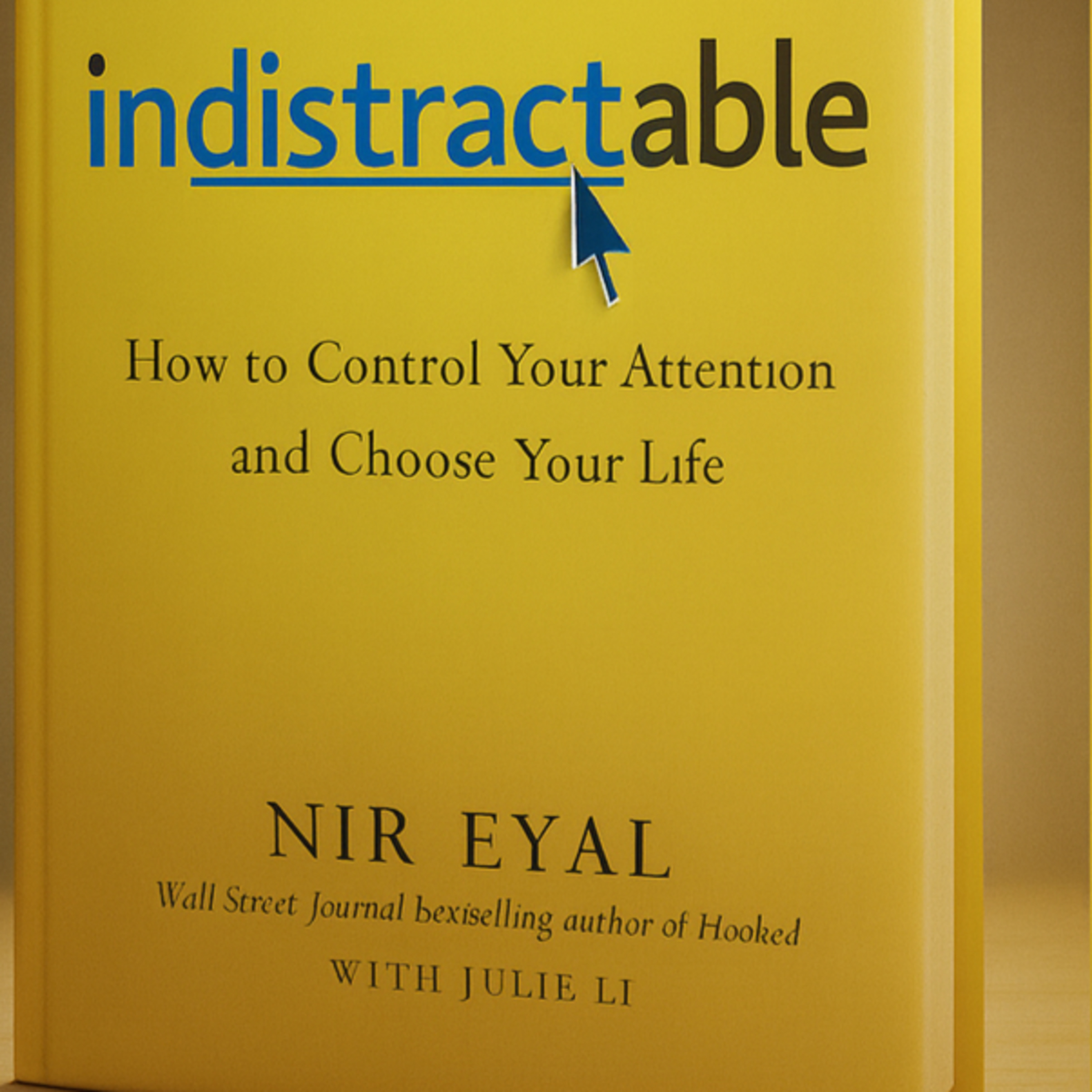
Why You Can't Focus (And How to Fix It) | Indistractable by Nir Eyal Deep Dive
Nir Eyal deep dive explain the reason why you can't focus and propose solution this is modern on going challenge. As technologies evolve we are continuously being bombard with more in more distracted from important works.
Watch on YouTube
"Time management is pain management. When we get distracted, we're not seeking pleasure—we're seeking relief from psychological discomfort."
Insight
Eyal reframes distraction through the lens of intent: traction pulls you toward what you want, while distraction pulls you away from what you planned.
Key Insight: Action isn't judged by the activity itself but by intent. Checking email can be traction (if scheduled) — or distraction (if avoiding discomfort).
🎯 The Real Enemy
Not technology — but internal triggers: boredom, anxiety, uncertainty, fatigue, loneliness.
💡 Most Productivity Advice Fails Because...
It treats the symptom (notifications) instead of the disease (discomfort).
🧭 The Four-Part Framework
- Master internal triggers
- Make time for traction
- Hack back external triggers
- Use pacts (effort, price, identity)
Reflection
🧠 We've Been Sold a False Narrative
That willpower is a finite battery. That technology controls us. That distraction is inevitable.
Eyal dismantles all of this.
⚡ Willpower Only Runs Out if You Believe It Does
Technology isn't inherently evil — it's neutral.
The issue isn't distraction. It's that we haven't defined what we want to be distracted from.
📅 If Your Calendar Is Blank, Everything Becomes Traction
Evolution designed us to be dissatisfied. Restlessness keeps us alive — contentment doesn't.
"This isn't a flaw to fix — it's a feature to understand."
When we see distraction as escape from discomfort, we can treat the cause, not the symptom.
Practice
Master Internal Triggers
When you feel the urge to distract yourself, pause and identify the discomfort (boredom? anxiety? uncertainty?). Use ACT techniques: look for the discomfort, write it down in a distraction tracker, then "surf the urge" using the 10-minute rule—wait 10 minutes before giving in, and usually the wave of desire will subside.
Reimagine boring tasks by finding variability and micro-challenges.
"Labels like 'easily distracted' or having an 'addictive personality' give permission to fail."
Make Time for Traction
Migrate from to-do lists → timeboxing.
Use zero-based calendaring—every minute should be accounted for, including sleep, meals, and "nothing time." Fill your calendar in this order: Domain 1 (You—self-care), Domain 2 (Relationships—schedule recurring gatherings), Domain 3 (Work—distinguish reactive vs. reflective work).
You can't say you were distracted unless you know what you got distracted from.
Hack Back External Triggers
- Treat email like office hours—set auto-responders and delay delivery.
- Treat group chat like meetings—schedule time to check it, don't leave it open.
- Rearrange your phone: Page 1 (tools), Page 2 (aspirations), Page 3 hidden (slot machines).
- Turn off all notifications except emergencies.
- Use the "Pocket Rule"—never read articles in your browser; save them for scheduled time.
Prevent Distraction with Pacts
Create precommitments in your "cold" state to bind you during "hot" states.
Use effort pacts (increase friction—block websites, lock away your phone), price pacts (financial stakes for short-term tasks), and identity pacts (most powerful—say "I am indistractable" and share this identity publicly).
Identity pacts align behavior with self-image: a vegetarian doesn't use willpower to avoid meat—they simply don't eat meat. It's who they are.
Becoming indistractable isn't about perfection—it's about awareness, intention, and systems. Start tomorrow by identifying one internal trigger and timeboxing one value. That's your first step toward controlling your attention and choosing your life.
Popular Videos
Most watched long-form content from our channel.